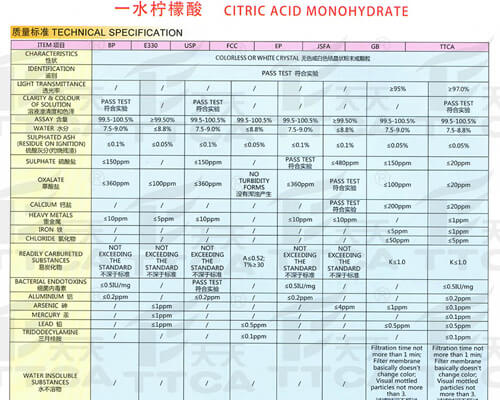
TTCA citric acid specifications (datasheet)
Ask any food manufacturer, drink maker, or cleaner formulator who ever opened a bag of citric acid, and they’ll tell you: if a spec sheet isn’t clear, trouble follows quickly. I’ve spent years talking with people on the production floor, folks in R&D, and logistics teams faced with mountains of white powder that needs to deliver the right acidity or blend. When you see TTCA citric acid datasheets, it’s tempting to skim through—just another document—but those black-and-white numbers impact shelf life, taste, safety, and even environmental standards. There’s nothing more frustrating than discovering the grade shipped one day doesn’t dissolve the same way, or ends up clouding a beverage line, throwing off hours of scheduled production. Purity, moisture, heavy metals—these aren’t box-ticking categories. They decide if you need to recall a product, if a shipment gets stuck at customs, or if a batch gets rejected by a picky customer halfway across the globe. A flawed spec not only wastes resources, it erodes trust in suppliers and puts brand reputations on the line. Citric acid seems benign—just an acid from citrus fruit, they say. But one contamination or mislabeling incident brings crushing costs, from ruined equipment to real health risks. If a TTCA sheet underplays lead content or misses an allergen risk, vulnerable groups including children, immunocompromised people, and sensitive populations could face harm. Just last year, a small miscalculation in heavy metal specs for citric acid caused a major food producer to halt distribution across several markets. This had direct consequences on inventory, but it also shook consumer confidence. We rely on TTCA and other leaders to give us more than minimum figures. Any ambiguity opens doors for counterfeiting and under-the-table substitutions, especially in global supply chains where goods travel thousands of miles through many hands. Without firm assay numbers and clarity on contaminants and particle size, producers take on unnecessary risk. Companies that ignore these lessons eventually face either legal trouble, lost contracts, or both.There’s more to these datasheets than compliance. Uniform formulations save money and reduce waste. A cleaner manufacturer can spend weeks chasing after problems that stem from a batch that doesn’t dissolve fast enough or goes lumpy because the wrong grade arrived unannounced. Food and beverage makers fine-tune recipes around precise acid strengths, expecting every bag to perform exactly the same. Variations in TTCA specifications mean extra testing, more QC spend, or costly recipe rework. Even a tiny bit too much moisture leads to caking, ruining ingredients and gumming up automated dispensing lines. For global industries moving hundreds of tons in just a few days, a single spec discrepancy forces slowdowns everywhere, right back to the source. Most supply chain headaches I’ve heard about trace back to inconsistent specification sheets or missing certificates of analysis. One fact stands out: global trade doesn’t forgive mistakes, and regulators everywhere watch food additives and industrial chemicals with a microscope. Without an accurate TTCA citric acid datasheet, ingredient traceability stumbles. Customs agents or auditors could seize or destroy shipments lacking just one required column or test method. That’s not just paperwork; it’s money and time lost forever. Responsible companies drive for tighter internal controls and third-party verification. They chase independent lab analysis and open pathways for feedback and correction. I’ve seen smart producers pull random samples for verification, making sure the numbers promised in a datasheet hold up in reality, and send warnings back up the supply chain when issues show up. Industry groups talk to each other, sharing blacklists and preferred partners, so transparency gains value over secrecy. I believe tighter international alignment between TTCA and major standards groups could bring more peace of mind. Regulators should demand plain language and make sure the average batch handler or QC tech can understand what comes in the door. Citric acid isn’t a sexy ingredient, and it rarely makes headlines, yet it’s in our drinks, candies, supplements, dish soaps, cleaning sprays, and even pharmaceuticals. The datasheet is the thin line between business as usual and costly mishaps. The boring line items—arsenic, lead, sulfates, mesh size—safeguard consumers and whole companies. At the end of the day, trust in TTCA’s published specifications flows all the way down to everyday shoppers standing in a supermarket aisle or buying export-grade produce. It makes sense for buyers to demand random audits and for suppliers to welcome third-party scrutiny. Earning that trust is tough, but every missed decimal point in a data sheet gives competitors an edge and chips away at industry credibility. I’ve never met anyone in formulation or compliance who wished for less information or was happy with vague specs; the more complete and clear the sheet, the smoother the path to safe products and satisfied customers. Ultimately, private and public interests come together on the page of a specification sheet, shaping supply chains that touch all of our lives—often without us ever knowing it.
March 24, 2026