Trisodium Citrate Dihydrate: From Origins to Future Possibilities
Historical Development of Trisodium Citrate Dihydrate
Trisodium citrate dihydrate didn’t just show up in modern labs. Centuries ago, citric acid found in citrus fruits led to discoveries that changed how people preserved food and balanced acidity in recipes. Scientists isolated citric acid in the late 1700s, recognizing its sourness and preservation qualities. Over time, researchers learned to neutralize citric acid with sodium compounds. This gave rise to sodium citrate products, including the dihydrate form — a version holding onto just enough water molecules to remain stable and easy to handle. Through shifts in manufacturing, bulk production, and globalization, trisodium citrate dihydrate’s journey shifted from a discovery in limes to a standard component in countless industries, all because early chemists looked for ways to stabilize, buffer, and enhance food and medicine safety.
Product Overview
Trisodium citrate dihydrate stands out as a versatile salt, derived from citric acid and sodium carbonate or bicarbonate. It usually appears as white crystals or a fine, granular powder, dissolving quickly in water to form a clear, mildly alkaline solution. This salt pops up across food, beverages, pharmaceuticals, and even cleaning solutions. Its popularity rises from the way it manages acidity, acts as an anticoagulant, and lends stability in products where sudden changes in pH or texture can ruin an entire batch. Because it plays nicely in so many different situations, manufacturers count on a consistent, pure product — a point regulators and quality-control experts don’t take lightly.
Physical & Chemical Properties
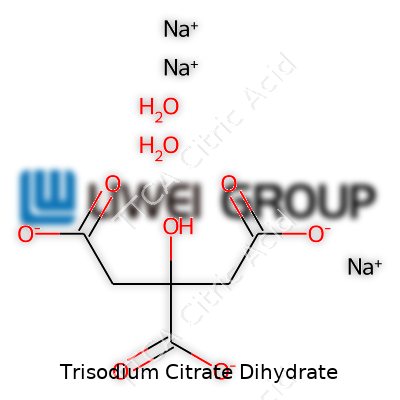
Anyone who’s handled trisodium citrate dihydrate notices its chalky, odourless nature. The powder flows easily, clumping only in high humidity. It melts at temperatures just over 150°C, giving up its water to become anhydrous sodium citrate. This salt's high solubility in water helps it deliver precise effects, from controlling tartness in sodas to keeping fatty sauces from breaking apart. With a molecular weight of 294.10 g/mol and the formula Na3C6H5O7·2H2O, it treads lightly in both taste and interaction with other ingredients, rarely overshadowing flavors or interfering with mixes. This reliability puts it on the list of go-to excipients for delicate pharma blends and food prep.
Technical Specifications & Labeling
Manufacturers and distributors follow strict guidelines on purity, particle size, and contaminant limits. International standards set by the Food Chemicals Codex (FCC), United States Pharmacopeia (USP), and E-number E331 for the EU define what lands in the bag or drum — and what’s clearly printed on every label. Labels state chemical composition, purity (often 99% or better), country of origin, batch numbers, shelf life, and recommended storage conditions. Tech sheets address possible allergens, heavy metal content, and residual solvents, leaving no guesswork for anyone deciding if a lot fits medical, food, or industrial rules.
Preparation Method
Creating trisodium citrate dihydrate doesn’t require a complicated setup, but it does take precise control. Producers start by neutralizing citric acid with sodium carbonate or sodium bicarbonate in water at a set temperature. The solution gets filtered and cooled, prompting the salt’s crystals to form. Workers dry and package the crystals right after harvesting. Maintaining sanitary conditions through each step makes a difference; cross-contamination and incomplete reactions can spoil the final product. These routines also prevent unwanted by-products, which is crucial in food and medicine applications. Regular checks and modern filtration guarantee each grain meets strict purity targets and dissolves clean, leaving behind no gritty residue.
Chemical Reactions & Modifications
Trisodium citrate dihydrate likes to hang out with both acids and bases. When added to acidic environments, it acts as a buffer, soaking up extra hydrogen ions and flattening sharp flavors or wild pH swings. Heat the salt above 150°C, and it sheds its water, turning into anhydrous sodium citrate — a handy tweak for those who need less moisture. Chemists sometimes alter it by ion exchange or crystallization from different solvents to fit pharmaceutical or specialty needs. Today's world demands advanced versions, including microcrystalline or extended-release forms, though the building blocks always start in the familiar dihydrate state that food makers and hospital pharmacies rely on.
Synonyms & Product Names
Across the globe, labels use a jumble of names, but they all trace back to the same reliable salt: trisodium citrate dihydrate, sodium citrate dihydrate, or E331. Some countries call it citrosodine. Chemical suppliers may simply print ‘trisodium citrate salt’ or abbreviate it to ‘TSC dihydrate.’ Despite language barriers, industry leaders and end-users recognize its utility, regardless of what the package says.
Safety & Operational Standards
Approved for use across food, beverages, and medicines, trisodium citrate dihydrate wins trust for its low toxicity and predictable behavior. Organizations like the FDA, EMA, and WHO review every detail — from production flowcharts to granule size — before granting acceptance. Safety data sheets spell out precautions: keep spills dry, avoid inhaling dust, and wear eye protection in large-scale settings. Rarely, users with severe sodium sensitivity or chronic kidney issues stay away from sodium citrate salts, as they can subtly impact fluid or electrolyte balance. Workplaces invest in training, proper storage (cool, dry rooms), and up-to-date personal protective equipment so every batch stays pure and safe from production line to loading dock.
Application Area
In every grocery store, trisodium citrate dihydrate keeps sodas zingy but not tongue-burning, dairy products shelf-stable, and preserves from soured spoilage. The same salt stabilizes medicines and controls acidity in intravenous fluids. In blood banks, it stops clots without chemically altering blood cells, making blood draws safer and smoother. Cheese manufacturers love its power to melt and bind proteins, giving processed cheese its stretch and smooth slice. Industrial uses include detergents, water treatment, and electroplating solutions where careful control over metal ion concentration can save materials and energy. Malt beverage makers, hospitals, and even home cooks trust this simple salt to bring reliability at every step.
Research & Development
In research centers and biotech labs, trisodium citrate dihydrate continues to make new advancements possible. Scientists push into fields like injectable nanomedicines and controlled drug delivery, where citrate’s gentle buffering improves patient safety and helps drugs slip past biological obstacles. Animal feed scientists study its ability to enhance mineral absorption in livestock. Dental products use it as a mild anti-sensitivity agent, and new food chemistry projects keep finding ways to make taste and texture last longer without artificial preservatives. Pharmaceutical teams test modified forms as excipients and stabilizers, ensuring precise dissolution and compatibility with new active ingredients. With abundant supply chains and reliable sourcing, innovation builds on a solid, known foundation.
Toxicity Research
Extensive studies show trisodium citrate dihydrate’s safety in food, drink, and medicine, cementing its place on regulatory ‘generally recognized as safe’ lists. Animal testing and clinical trials confirm the body breaks it down without storing harmful residues. Overconsumption leads to minor issues like mild digestive upset in sensitive people, but the risk profile matches or beats most dietary salts. Hospitals rely on it in high doses for short periods, such as urinary alkalinization or blood storage, with careful staff monitoring. Environmental researchers monitor large-scale discharge, but its biodegradable nature means little harm to waterways compared to many synthetic chemicals. Careful, evidence-based reviews continue, always watching for long-term effects or new patterns as medical and dietary habits change.
Future Prospects
The story of trisodium citrate dihydrate won’t stop with current uses. Food scientists look ahead to plant-based products where clean labels and low-sodium reformulation challenge the industry. Biotechnologists develop new forms for injectable medications, slow-release tablets, and even next-generation dialysis solutions. Cleaner manufacturing and greener chemistry drive innovation in waste reduction and energy savings, inspired by sustainability targets. Education programs target manufacturers, food handlers, and the public, helping everyone recognize safe, science-backed uses and limits. R&D teams hunt for applications in emerging sectors, like biodegradable plastics and enhanced water purification. In all these, trisodium citrate dihydrate’s blend of safety, adaptability, and years of experience will keep carving space on shelves and in labs, far from its roots in simple lemon and lime extracts.
In the Kitchen, On the Table
Trisodium citrate dihydrate shows up all over the grocery store. If you have ever noticed a smoother cheese sauce at a fast food place, there’s a good chance you’ve tasted it working behind the scenes. This ingredient acts as an emulsifier. It helps keep melted cheese from splitting into a greasy mess. You get that creamy texture in macaroni and cheese or nacho dips because the science of sodium citrate brings fat and water together, making things tasty and easy to work with.
Beyond cheese, you’ll spot trisodium citrate dihydrate in sodas and ready-made lemonades. It snaps up extra acid, so drinks don’t get mouth-puckeringly sour. It also balances sweetness and tartness, helping flavors stand out. Kids sipping on brightly colored punch have felt the difference, even if no one printed the ingredient big on the label.
Health and Medical Uses
Doctors and nurses use trisodium citrate dihydrate for more than adding zing to snacks. When someone donates blood, this compound keeps things flowing by stopping blood from clotting in the bag. Hospitals rely on its anticoagulant properties. It helps preserve blood and makes collection safer.
During kidney dialysis, the body’s chemical balance can shift out of whack. Trisodium citrate steps in to buffer the blood and control acidity. For people with certain digestive problems, it works as part of oral rehydration solutions. These packets—mixed into water—help patients keep their electrolytes steady after vomiting or diarrhea.
Keeping Food Fresher
Shoppers want food that travels well and keeps its color and texture. Trisodium citrate dihydrate helps canned vegetables hold their shape and color by reducing acidity and stabilizing pH. The food stays brighter and crispier after months on a shelf.
Sausage makers, bakers, and soup producers have turned to this additive for decades. In ground meat, it stops fat from separating while extending shelf life. In bread, it manages the fermentation process, keeping flavors balanced through a long rise. Some might worry about ‘chemical-sounding’ names, but research confirms trisodium citrate’s safety when used in food and medicine. Food safety authorities across the world—including the US FDA and the European Food Safety Authority—have labeled it safe.
Environmental and Industry Value
Outside the kitchen and hospital, factories use trisodium citrate dihydrate to clean and control. Cleaners with this ingredient break down scale in boilers and coffee machines. It grabs hold of metal ions, helping detergents do their job more efficiently. Paper companies also use it to keep their production lines running smoothly.
I’ve seen this firsthand in university chemistry labs. We’d prepare buffers to keep experiments stable. Trisodium citrate made life easier when working with sensitive reactions.
Looking Forward: Safer and Smarter Use
People care what goes into their food, their bodies, and their environment. Labels should make it clear why additives like trisodium citrate dihydrate get used and at what levels. Open, honest science leads the way forward. Food companies have a responsibility to use safe levels and to explain choices. Governments enforce international standards. As long as makers and regulators keep consumer health front and center, this useful compound will keep making life a bit smoother—from the dinner table to the hospital and beyond.
Understanding Trisodium Citrate Dihydrate
Trisodium citrate dihydrate sounds like something far removed from the average kitchen, but it’s been a silent helper in most households for decades. It acts as a food preservative and flavor enhancer for soft drinks, candies, sports drinks, and even some dairy products. The main task it handles is to regulate acidity, making sour things a little gentler on the tongue.
Its scientific-sounding name can turn a few heads. People worry about chemicals they can’t pronounce in their food. Having worked with food labeling in product development, public concern over ingredients always comes from a genuine place: people want to be safe. The trick is sorting out which fears are grounded in real science and which come from the unknown.
Safety Backed by Research
Research teams have dug into the effects of trisodium citrate dihydrate for decades. Globally recognized authorities, the U.S. Food and Drug Administration (FDA) and European Food Safety Authority (EFSA), have both classified trisodium citrate as generally recognized as safe (GRAS) when used within typical amounts found in food and beverages.
Direct health effects rarely pop up because the substance dissolves in water and breaks down into sodium and citrate ions. Citrate is a natural partner in the body’s energy cycles, and the sodium content isn’t higher than you’d find in many processed foods. If someone drinks a liter of lemon-lime soda a day, the sodium from citrate salts won’t outweigh what comes from a salty bag of chips.
Concerns about allergens or toxic reactions regularly arise. Reliable clinical data hasn’t identified trisodium citrate as an allergen or as causing unexpected illnesses in the general population. Individuals living with kidney issues or who need to follow very low-sodium diets should take note of extra sodium, but that’s true for many food ingredients, not just this one.
Consumer Experience
Food manufacturing rarely puts trisodium citrate front and center. Instead, it works quietly: melting cheese for nachos, thickening sauces, and keeping sports drinks from becoming too tart to chug. Sitting around a kitchen table with family and reading the label can make people nervous, but open sourcing and transparency always ease minds. My relatives like to ask, “Would you eat that?” For trisodium citrate, my answer is simple: yes, within sensible limits.
Over the years, I’ve read claims online that substances like this cause immediate harm. It’s easy to find long lists of “dangerous chemicals,” but a little research goes a long way. Reviewing reputable studies and learning that trisodium citrate breaks down into basic components found in fruit and salt usually quells any fears.
Better Choices in Everyday Life
People can avoid food additives if they wish by focusing on whole foods. Walking through a produce aisle gives peace of mind that factory formulations haven’t hit dinner. Others want the convenience and taste benefits that come from modern food science. Either way, knowledge puts power back in people’s hands.
Reading up on additives, asking questions, and demanding honesty about sourcing helps everyone. Taste, safety, and health can exist together when producers and consumers keep the conversation going. That’s what helps families feel confident in what ends up on their plates.
Reading the Fine Print in Everyday Ingredients
Digging through an ingredient list for something as common as lemonade mix or a bag of shredded cheese, I often spot names like trisodium citrate and its cousin, trisodium citrate dihydrate. They sound nearly identical. Both show up in food, drinks, cleaning products, and even medicines. Brands and ingredient suppliers love these additives, but most folks hardly give them a thought. I only looked closer because I’m picky about what I eat, and I like knowing what’s in my food.
Hydration—More Than Just a Marketing Term
The real difference between these two comes down to water. Trisodium citrate dihydrate literally contains two molecules of water locked into each unit of its crystal structure. Trisodium citrate, on the other hand, skips this. That single detail shapes how each works in a formula—something you quickly get familiar with when you bake bread or work behind the bar at a soda fountain.
At first glance, those two molecules seem like a small thing. But dive deeper, and this difference changes everything from shelf life, mixing, and even dosing in medicine. Let’s say you’re adding trisodium citrate dihydrate to a sports drink. Because it has extra water, you’ll measure out more powder to get the same impact compared to regular trisodium citrate. That extra water isn’t just dead weight—it can matter in how stuff mixes, dissolves, and keeps products stable on the shelf.
Food Use and Everyday Impact
Food manufacturers switch between the two forms based on what they want to achieve. Trisodium citrate (the anhydrous type) handles more like a dry, fine salt—it packs more punch gram for gram since it’s not carrying extra water. It also has a longer shelf life as it’s less likely to clump from moisture. I remember trying to use a scoop of it as a cheese emulsifier; the cheese came out smooth every time, like the sauce from the fancy taco place down the street. Using dihydrate did the job, but I needed a bit more to get the same results; at home, that can mess with recipes if I’m not paying attention.
In pharmaceuticals and medical use—think about rehydration salts for a rough stomach flu—this tiny difference gets critical. Dose calculations must be precise. Too much or too little sodium can tip the scales. Drug makers state the exact form for a reason: doctors and patients both need consistency and safety.
Sourcing, Storage, and Solutions
The challenge for anyone—from factory managers to home bakers—lies in choosing the right type for the job and reading labels carefully. This isn’t just a minor science lesson; errors create batch failures, or in healthcare, risks to patients. I’ve spoken with folks in catering who learned this the hard way after using the “wrong” citrate—end result, their sauces didn’t hold together, and hundreds of meals needed replacements.
Sourcing guides could do a better job highlighting these differences. Education makes a big difference, too. More brands could call out which type appears in their products and why, rather than lumping everything under catch-all ingredient names. Manufacturers benefit from clear specs, and customers at every level get equipment that doesn’t jam, foods that taste right, and medicines that work as planned.
Each form does the same main job—adjusting acidity, preserving shelf life, or stabilizing recipes. Still, in any field where precision matters, the choice between trisodium citrate and its dihydrate cousin matters more than most folks think. The detail can spell the difference between success and a costly mistake.
Recognizing the Purpose Behind Proper Storage
Trisodium citrate dihydrate comes up often in labs, kitchens, and production floors. People rely on it for a range of tasks, like adjusting pH, preventing clumping in food, or keeping medications stable. Keeping this compound safe and usable is more than ticking a box—it’s about making sure it does its job and doesn’t bring unexpected problems down the road.
Moisture: The Silent Saboteur
Walk into any storeroom, and you’ll notice supplies that no one wants touching water. Trisodium citrate dihydrate sits high on that list. It pulls in moisture from the air, which leads to clumping or even dissolving if humidity gets out of hand. You leave a bag open, humidity sneaks in, and soon you’re looking at chunky, unusable powder. Food manufacturers and pharmacists who ignore this risk end up with formula changes, wasted batches, or failed product testing.
Practical Steps for the Real World
It never hurts to remind people: keep containers tightly sealed after every use. Whether you use plastic drums or air-tight jars, the goal remains the same—block moisture. For bigger batches, foil-lined bags and desiccant packs make a real difference. Even for those just using it at home, storing it in smaller, well-sealed containers cuts down on clumping over time. It may look like an extra step, but it pays off in fewer headaches long-term.
Confronting Storage Conditions
Temperature swings also take their toll. High heat pushes water out of the compound, while cold and humidity together lead to condensation inside a container. Shelving it in a cool, dry space—ideally between 15°C to 25°C—keeps the powder from turning into a sticky mess. Avoid storage near hot water lines or windows with direct sunlight. If possible, pick a spot with steady conditions, like an interior closet or climate-controlled storeroom. In shared workspaces, putting up reminders or labels about ideal storage goes a long way toward stopping careless mistakes.
Cleanliness and Cross-Contamination
Dirty scoops, sticky hands, or residue from other chemicals can mess with trisodium citrate dihydrate over time. In labs and factories, clean tools prevent foreign substances from sneaking in. At home, a dedicated scoop helps. Leftover food particles or wrong labels have shut down more than one kitchen or lab. Label containers clearly, keep them off damp floors, and never return unused powder that touched open air or another product. Practical, easy-to-follow habits stop bigger problems from creeping into the process later.
Understanding the Why
Ignoring proper storage leads to more than wasted money. Poor handling in manufacturing settings means product recalls, complaints, or even regulatory fines. In small businesses, inconsistent powder quality costs time and customer trust. From experience, setting up a simple checklist or training new staff pays off many times over. Reliable product stays reliable only when storage gets the attention it deserves.
Solutions That Stick
Success often comes from small changes. Use desiccants in containers, keep bags sealed tight, and always double-check storage spots for leaks. For those managing bigger volumes, a periodic audit of storage practices helps spot issues before they snowball. Trisodium citrate dihydrate pulls its weight in plenty of industries—protecting it from preventable mishaps means fewer surprises and confidence that results match expectations every time.
Food Applications
Trisodium citrate dihydrate shows up in plenty of kitchens, processing plants, and food labs. Cheese makers count on it for melting and texture, because it keeps cheese gooey and smooth when heated. This simple salt helps cheddar slices, nacho cheese sauce, and block cheese melt evenly without turning into an oily mess. The world’s love of processed cheese wouldn’t be possible without it. Watching a pizza come together in a pizzeria, you might not think about food chemistry, but trisodium citrate is there behind the scenes helping shredded cheese stretch rather than break into lumps.
Sour drinks at the grocery store usually have trisodium citrate as an acid regulator. Soda makers rely on it for a sharp but not overwhelming taste. Sports drinks on a hot day taste less harsh because this ingredient cuts the acidity, making the drink easier to gulp without irritating the stomach. This isn’t about following a recipe, but about managing pH so drinks keep their flavor balanced and safe to store. In this sense, the salt keeps both the taste and the shelf life right where they need to be.
Jellies, jams, and candies also benefit from trisodium citrate. By helping set the texture and stabilize gels, it gives those sweet treats their bounce and smoothness. It steps in as an antioxidant too—slowing color and taste changes in packaged foods over time. In my experience working at a commercial bakery, balancing the gel in a fruit filling always involved fine-tuning with this salt. A heavy hand and your jam would fail to set; too little, and you’d get a runny mess.
Industrial Applications
Outside the kitchen, trisodium citrate shows its versatility in some unexpected spots. Hospitals and blood banks use it for blood storage and testing. Here, it acts as an anticoagulant, binding calcium ions to prevent blood from clotting inside collection bags or tubes. Medical professionals can rely on stabilized blood for tests or transfusions, all thanks to a chemical some only recognize from nutrition labels.
Maintaining industrial boilers and cooling systems demands water that won’t scale or corrode pipes. Trisodium citrate softens water and manages deposits in the pipes, saving companies trouble and expensive repairs. The salt’s ability to bind mineral ions beats back limescale, and its mildness makes it a regular choice in systems that can’t handle harsher chemicals.
Detergent makers choose trisodium citrate because it fights hard water while staying gentle on the environment. In households with mineral-rich tap water, this ingredient boosts cleaning power for laundry and dishwashing, lifting stains and helping soaps rinse away without leaving streaks.
Pharmaceutical manufacturers also use trisodium citrate to adjust pH in liquid medicines or to act as a buffer. In some cases, this keeps medicines palatable and safe to swallow, especially for children and patients sensitive to aftertastes.
Potential Concerns and Solutions
Like with any food additive, discussions about excess sodium intake come up, especially for people who watch their salt closely. Reducing sodium in these applications calls for research into lower-sodium alternatives or using blends with potassium. In industry, wastewater from processes using trisodium citrate can raise environmental flags, since citrate can act as a nutrient for unwanted algae in waterways. Wastewater treatment upgrades and improved effluent management help address these impacts. Scrutiny over additives grows every year, so both food and industry players are pushed to use the lowest effective dose and keep consumers in the loop about what’s in their products.